
Introduction to Circular Economy
The circular economy is an economic model focused on eliminating waste and keeping resources in use for as long as possible through reuse, repair, recycling, and regeneration. It is important because it reduces environmental impact, conserves resources, and supports sustainable growth. Individuals can act by choosing durable products, repairing instead of discarding, and recycling responsibly.
Organisations can adopt circular principles by designing products for longevity, implementing take-back schemes, and using renewable materials.
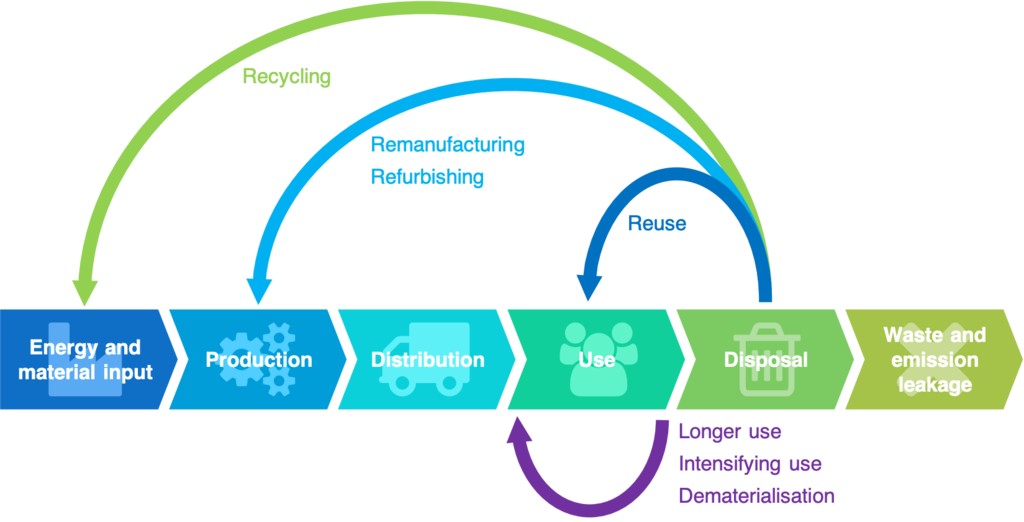
Together, these actions minimise waste, lower carbon emissions, and create a more resilient economy that benefits both people and the planet. Embracing circularity is essential for tackling climate change and biodiversity loss while ensuring long-term prosperity.
What is Circular Economy?

The Ellen MacArthur Foundation offers resources, case studies, and tools for businesses, educators, and policymakers to help explains how circular economy principles can support a more sustainable future. Their organisation supports organisations to transition from a linear models to more regenerative systems.

WRAP explains how circular economy principles cut emissions and waste by redesigning products, reusing resources, and reducing consumption. It offers policy briefs, practical examples, and guidance for governments, businesses, and communities to accelerate systemic change and achieve climate and biodiversity goals.

UN CC:Learn unites 30+ organisations to boost climate literacy and practical skills for resilience and adaptation. These courses offer strategic advice, quality learning resources, and guidance for governments, businesses, and individuals, promoting circular economy principles to keep materials in use longer.

